
Street Life Policies
In 2025, the Albany Convention Center Authority (ACCA) partnered with Capital Streets to explore key opportunities for improving connectivity, placemaking, and street life in Downtown Albany’s public spaces.
As a result of this exploration, Capital Streets produced a “Connectivity + Placemaking in Downtown Albany Study Report” for ACCA. Included in this report are policies related to street life which are categorized into three topic areas that were identified through stakeholder engagement and analysis of previous plans during research and development of this study.
Street Life Policies
Policies relating to cafe seating for brick-and-mortar establishments in the City of Albany.
Policies relating to the sale of goods, food, and beverages on streets and in public spaces within the City of Albany.
Policies relating to performance of music, art, or theater in public spaces within the City of Albany.
Each of these categories are regulated separately through various laws at the municipal level; however they do not function in a vacuum when it comes to street life. For example, outdoor vendors may create a new attraction or destination in a place that was previously underutilized. The popularity of that new destination may drive additional foot traffic to nearby brick-and-mortar establishments, thereby driving more business to these establishments and increasing the need for additional seating which can be met with outdoor dining areas.
A comprehensive set of policy updates to support these activities could bring a new sense of vibrancy* to Downtown Albany that is currently lacking, particularly outside of the 9am-5pm work day.
*For more on our thoughts on downtown vibrancy and Albany’s future, read our Downtown Albany Strategy memo.
Outdoor Dining
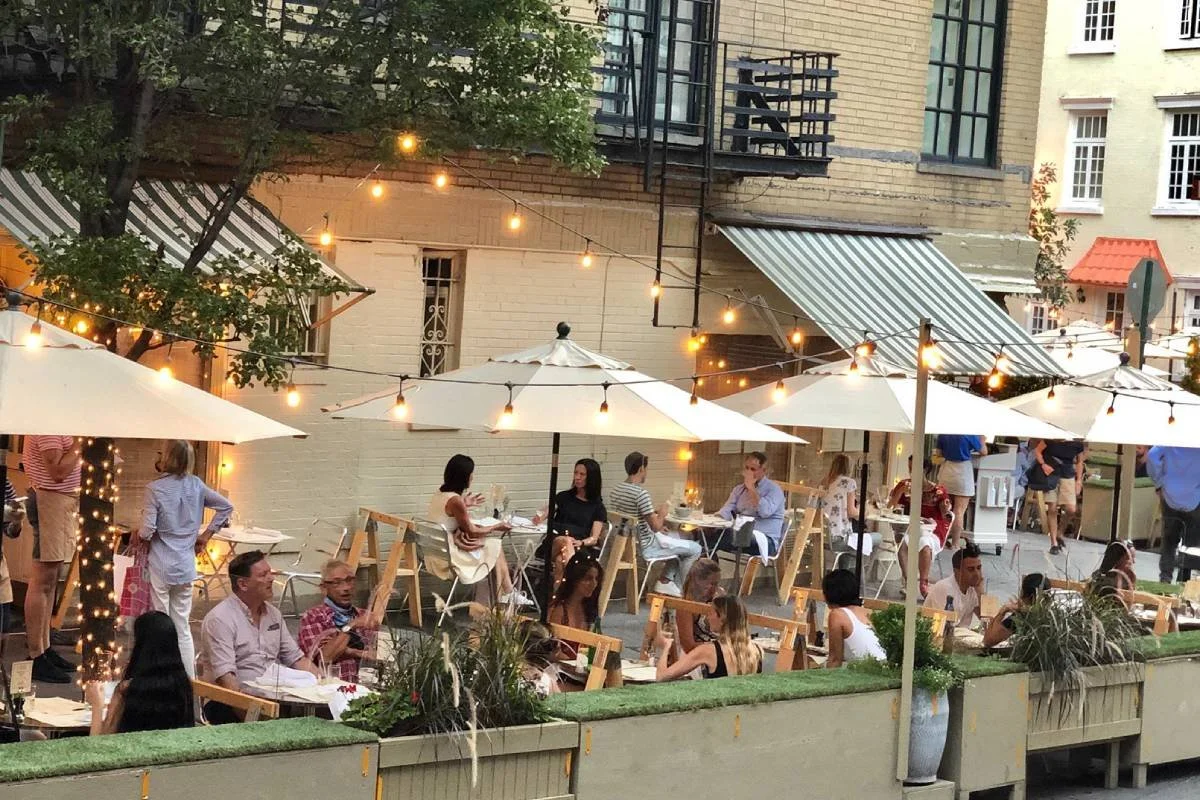
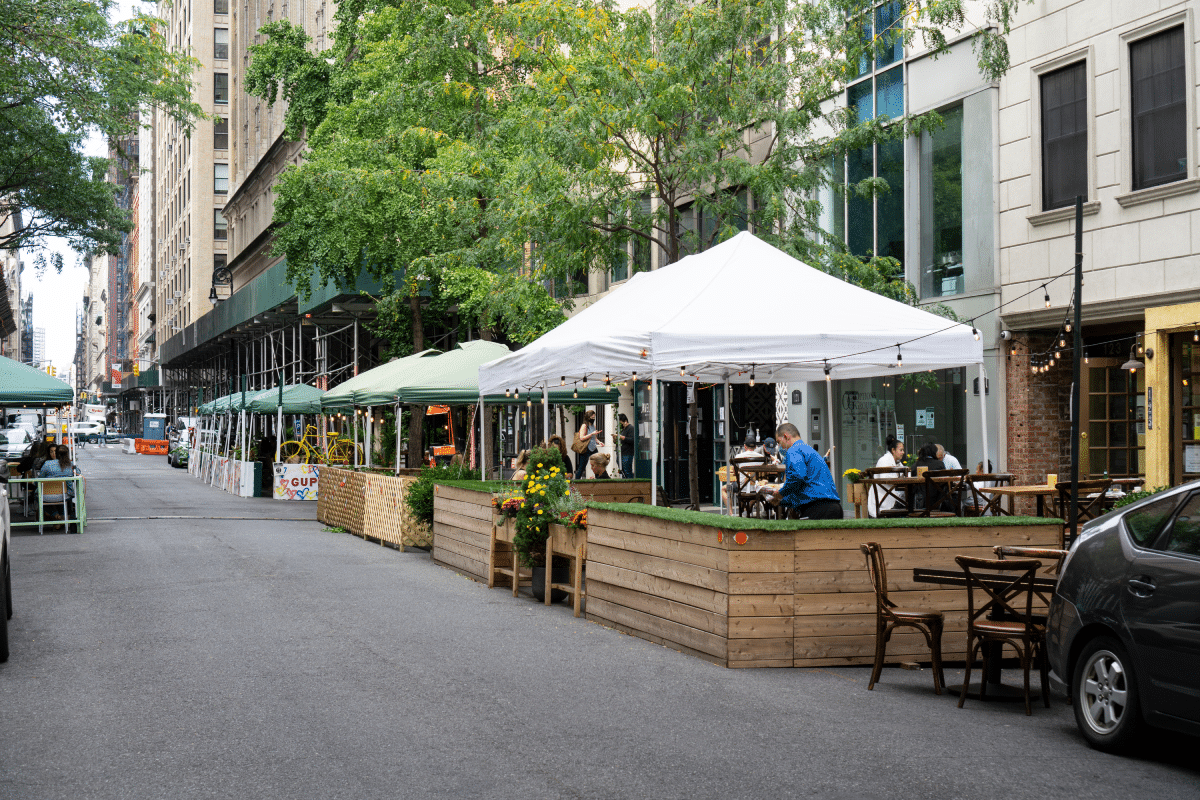
Nationally, there is growing interest in outdoor dining as a way to support the food industry after the success of outdoor dining as a way to keep dining establishments operating during the COVID-19 pandemic. Research has shown that policies aimed at promoting outdoor dining not only helped these businesses survive the pandemic shutdown, but have led to continued, equitable growth of the restaurant industry in municipalities that kept their pandemic era policies in place.
For example: in New York City, the pre-COVID Sidewalk Cafe Program had 1,000 permit holders in 2020 compared to 12,000 permit holders in 2023 after the City updated its policies. The City’s streamlined application process and reductions in permitting costs resulted in a 12x increase in permits issued. The largest beneficiaries of this increase are low income communities and communities of color, which doubled their share of outdoor dining establishments under the program reforms (Source: NYU Wagner).
Albany’s Outdoor Dining Policies
Finding 1: Albany’s outdoor dining regulations are confusing to navigate.
Outdoor dining in the City of Albany is regulated under the USDO, § 375-303(6)(m) and §375-505(18). This regulation does not appear under a basic search of the City’s code database; instead a search using typical keywords drives users to the previous regulations (§ 303) which have since been revoked. The previous regulations do not redirect users to the new regulations. The City of Albany Planning Department maintains guidelines for Cafe Permits on its website which reference the now-revoked regulations.
An applicant must be issued a permit for a revocable right-of-way privilege to establish an outdoor dining area. The regulations for this permit do not reference the City Planning Department’s guidelines for Cafe Permits; nor do they inform potential applicants where to find these guidelines, or the application itself. Furthermore, the revocable right-of-way permit application is not listed on the City Clerk’s website for licenses and permits.
Finding 2: There are inconsistencies between the City’s ordinances regulating outdoor dining, the required permit applications, and guidance documents.
Albany’s USDO states that businesses must maintain 5ft of clearance for pedestrian passage. This standard is repeated in the Planning Department’s guidance document. However, the application for a revocable right-of-way privilege lists 4ft or 50% of the total sidewalk width, whichever is larger.
The Planning Department’s guidance document frequently references “parklet” regulations for creating dining areas where on-street parking would typically exist. However there is no reference to parklets anywhere in the City’s code. It is unclear if the City has a definition for parklets or is in a position to regulate them as outdoor dining areas despite significant focus on parklet design in the guidance document.
Finding 3: Overly burdensome requirements.
The application for a revocable right-of-way permit requires approval by the City Engineer (currently a vacant position) and a Chief Planning Official; decisions may be appealed through the Board of Zoning Appeals. With inconsistent guidelines and multiple entities that can deny an application, the process to secure a permit discourages small businesses from participating.
The Planning Department’s guidelines for cafe permits outlines requirements for furnishing of outdoor dining areas. These requirements are excessive; they include a requirement for all furniture to be temporary and lightweight while also banning the use of easily accessible materials like plastic.
Outdoor Dining Recommendations
Demystify and Streamline the Application Process
a. The former code regulating outdoor dining - § 303 of the General Code - should clearly reference and provide a link to the new ordinance regulating outdoor dining. This helps small businesses navigate the regulatory landscape without having to do extensive research.
b. The City should identify a single entity responsible for reviewing and granting approval of the revocable right-of-way permit application. As most development proposals are reviewed by the Planning Department it is recommended that the Planning Department have exclusive authority to approve applications with the option to refer an application to the Department of Engineering as needed.
Update the Planning Department’s Outdoor Cafe Manual
a. This public-facing document must align with the actual laws and ordinances regulating outdoor dining locally. The manual should undergo comprehensive review to ensure it is accurately reflecting local regulations and requirements. Additionally, these guidelines should place more emphasis on local context rather than the current guidelines which rely heavily on practices used in large cities like New York and LA (Ex: the parklet language and regulations are copied from NYC’s outdoor dining design guidelines despite no local framework for this).
Provide application support services
a. Guides, videos, and informational sessions can help local businesses understand outdoor dining regulations. Additionally, more training for City staff, like neighborhood specialists, and stakeholders like Capitalize Albany and the BIDs, could help small businesses navigate the process.
b. Standardize distributing the updated Outdoor Cafe Manual to food industry businesses as part of the approval process to operate their business.
Allow more flexibility in materials and site design
a. Albany’s small businesses should be trusted to choose furnishings and design materials that are appropriate for them - particularly outside of historic districts. So long as these furnishing and materials do not present barriers to accessibility or a public danger, businesses should be given creative freedom to design their outdoor dining areas in a way that works for them. Therefore, it is recommended that furnishing and design guidelines focus on form and function rather than materials.
Outdoor Vending
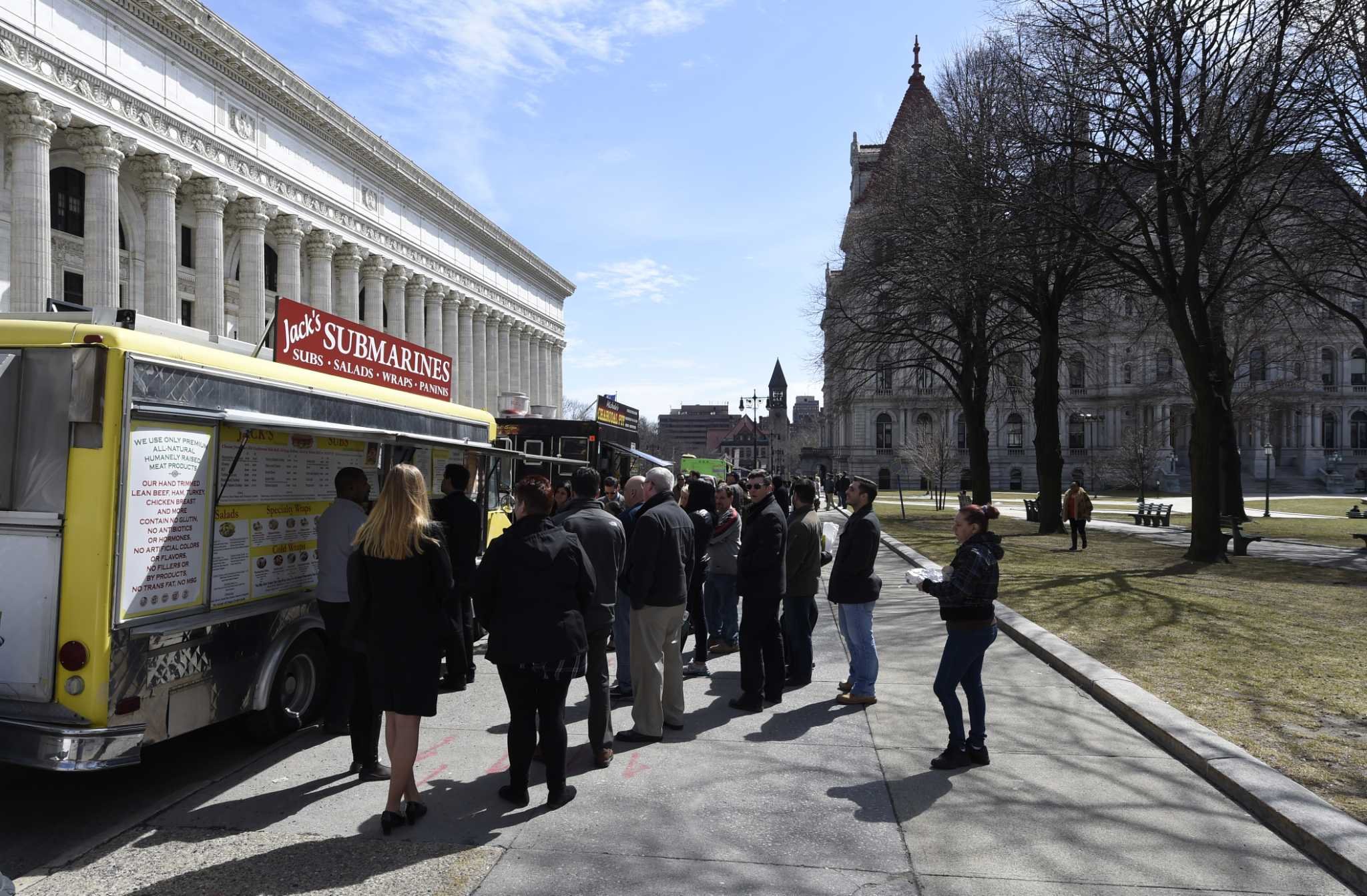
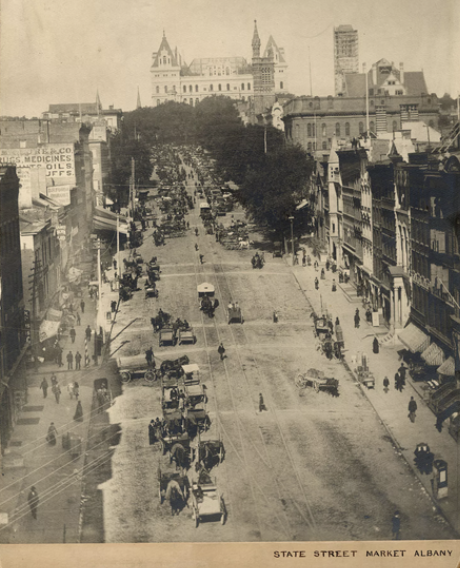
Street vendors were historically an integral part of the urban fabric of Albany, particularly in Downtown. State Street once functioned as a public market and the City still has laws on the books governing the sale of clams and oysters at the historic dockyards. Today, outdoor vendors in Albany are largely limited to a handful of food trucks that serve lunch near the Capitol.
Outdoor vendors include food trucks and carts, fruit and vegetable vendors, or anyone selling wares and goods in the public realm (streets, sidewalks, parks, etc.). These operations can make a significant economic contribution in urban areas. In 2017 food trucks alone reached $2.7billion in revenue (Source: US Chamber of Commerce Foundation). With low barriers to entry, outdoor vending can provide opportunities for entrepreneurs while also driving increased foot traffic to the areas where they operate.
By increasing vibrancy, vendors can help areas feel safer and more attractive and have been found to increase traffic to brick and mortar operations (Source: Institute for Justice). In places with high enough foot traffic, outdoor vendors can also bring fresh produce to neighborhoods with limited access to grocery stores (Source: NYC Department of Health) .
Albany’s Outdoor Vendor Policies
Finding 1: Albany’s outdoor vending fee structure and regulations are excessive when compared with other localities.
Albany’s food truck permit is $3,640 per year whereas Troy is $500 with a $75 application fee, and Schenectady is a $125 flat fee. Furthermore, Albany’s regulations establish different fee structures for different types of vendors while neighboring cities maintain a consistent fee structure for all vending activities.
Albany’s regulations prohibit outdoor vendors from operating after 9pm despite Downtown’s venues frequently hosting events that run beyond this time, preventing potential vendors from capitalizing on post-event crowds.
Finding 2: Albany’s outdoor vending regulations are unclear, leaving room for interpretation that creates uncertainty and discourages potential vendors from operating.
Albany’s regulations state that vendors are “prohibited from vending in a manner that interferes with pedestrian or vehicular traffic or other legitimate business in the City of Albany” without providing examples or defining specifics of what constitutes interference.
Albany’s regulations state that the vendor license “may limit the amount of space to be occupied by the vendor” without providing any additional guidance on spatial requirements or design standards. Comparatively, Troy’s vendor application includes regulations regarding truck/stand placement, waste receptacle requirements, and more.
Finding 3: Albany’s outdoor vending application forms are not consistent with the City’s regulations
Albany’s vendor permit applications list costs that are inconsistent with the regulations outlined in the City Code. For example, the City’s vendor regulations show a weekly fee of $70/week ($3,640/yr) for curbside vending while the City’s vendor application lists $2,170/yr. Neither the regulations or application specify seasonal restrictions on vending to account for the discrepancy.
It is unclear where vendors are allowed to operate in Albany. The City’s outdoor vendor regulations were adopted in 1988 and reference allowing vending in zoning districts that no longer exist after the City’s adopted the current zoning in 2021. The regulations imply that a vendor may apply for a permit anywhere that business activity is allowed. The City Clerk’s website has links for a general Vendor Permit Application and a Capitol Park Vendor License Permit. Both links lead to a form titled “Vendor Permit for Capitol Park Only - Curbside and Street / Seasonal.
Outdoor Vendor Recommendations
Update the fee structure for outdoor vending permits to be simplified and more competitive with other localities
The current fee structure has different fees for different types of vending despite there being little difference in terms of impact to City operations or public space for different types of vending (ex: food vs flowers). The City should establish a fee structure that uses a flat rate or is based on the scale of the vending operation. The current fee structure is prohibitively expensive when compared to neighboring municipalities. The City should reduce vendor permit fees to become a more attractive option for local entrepreneurs.
Complete a comprehensive update of the City’s vendor regulations.
The City’s current laws are outdated, not just because best practices around outdoor vending have changed since 1988, but because the current laws reference zoning districts and local laws that are no longer applicable. The most recent amendment to the existing regulations were in 2009. Since then the City has completed a comprehensive plan and adopted new zoning. A comprehensive update of the City’s vendor laws are needed to ensure compatibility with the new zoning and address outdoor vending in a modern way.
Correct the links on the City Clerk’s website for vendor applications.
The City’s regulations do not explicitly limit outdoor vending to the Capitol Park area; however, the only applications available on the City Clerk’s website are for that location. The Clerk’s website should have a working link to the City’s general vendor permit application, or the City must clarify that curbside vending is prohibited everywhere except the Capitol Park.
Support outdoor vendors by adopting policies that promote vending in vacant or underutilized parcels.
Many municipalities have found that outdoor vendors like food trucks are an easy way to activate vacant or underutilized areas. Some go as far as providing infrastructure - like water and electric connections - to create food truck pods. Albany should create a process to streamline vendor permitting in vacant and underutilized lots.
Entertainment
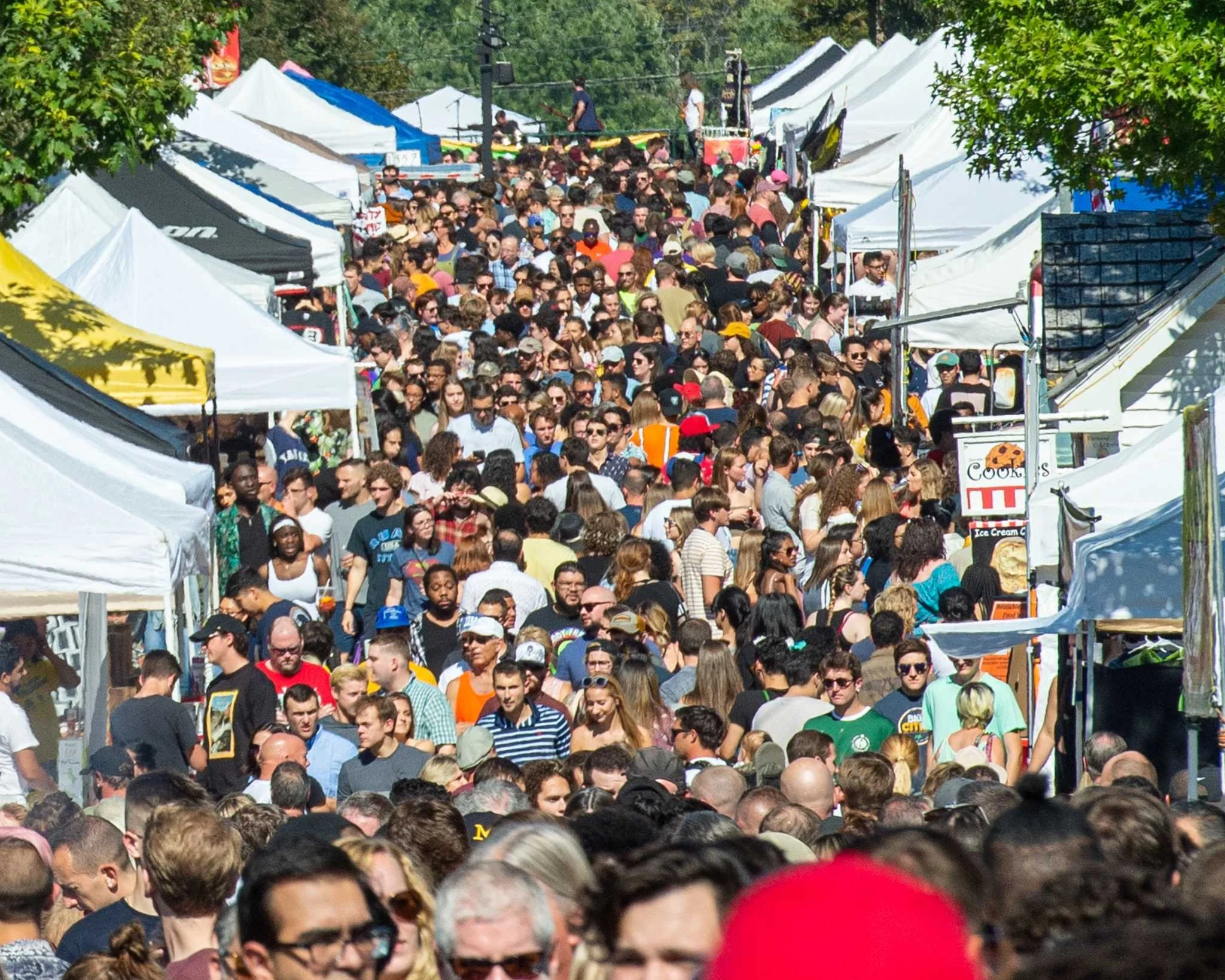
Entertainment and arts are a critical part of local economies, particularly in urban areas which typically function as hubs for art and culture. A report by the Upstate Alliance for the Creative Economy found that the Capital Region employed approximately 4,700 people in the performing arts sector and approximately 2,300 people in the visual arts sector; roughly three-quarters of these workers identified as freelancers or self-employed. Compared to similar sized metro areas the Capital Region ranks second in the nation for the highest concentration of creative industry jobs.
Albany could benefit from this thriving local niche by creating an environment in which entertainment is supported and nurtured rather than strictly controlled. Building a supportive culture around local entertainment isn’t just good for professional artists and performers, it is also good for the public perception of Downtown Albany. Research has shown that public spaces with street performances are perceived as significantly more visitable and restorative than spaces without (Source: National Library of Medicine). Furthermore, supporting a thriving arts scene means supporting local businesses. A 2023 study found that growth in the arts and culture sectors in Upstate New York have directly contributed to growth in tourism spending which typically goes to local restaurants, retailers, and other small businesses (Source: Center for an Urban Future).
Albany’s Entertainment Policies
Finding 1: Despite replacing the Cabaret License with an Accessory Entertainment License, many of the restrictive features of the old regulations remain
The approval process for an Accessory Entertainment License consists of a review by the heads of three City departments (Clerk, Chief of Police, Chief Building Official) as well as a 2-month public comment period which includes distributing the application to every common council member, relevant neighborhood associations, BIDs, neighbors within 100’, and a requirement for the applicant to post notices of the comment period on their property.
The regulations do not clarify the role of public comments and how these may impact the decision to approve or deny an application.
Finding 2: The City does not explicitly ban busking and street performance. However, noise ordinances and loitering laws have been used to prevent these activities, leading to confusion around what is allowed
The City’s loitering law states that a person may be determined to be loitering if they are obstructing pedestrian traffic or violating the City’s noise ordinance. The noise ordinance states that it is unlawful for a person to make “any unusual, unnecessary, or improper noise…in any street or public place to the annoyance or inconvenience of travelers.” Both of these laws have been interpreted by local police to mean street performance or busking is illegal in the City.
Unclear regulations around busking and responses by local police have created uncertainty around street performances and led to a culture that does not nurture entertainment in public places.
Finding 3: The City invests significantly into large events and festivals while allocating minimal funding for regular, small scale programming focused on supporting local performers and artists
Albany’s proposed 2026 budget allocates a total of $519,950 to contractual expenditures for Tulip Festival, Alive at 5, and Jazz Festival. These three events account for roughly 58% of the department’s contractual expenditures, and 39% of its total budget. Other event categories (“Winter Activities,” and “Festivals & Other Act.”) combine for a total of $21,500 in the budget; less than 3% of the department’s contractual expenditures and less than 2% of the total budget.
Entertainment Recommendations
Continue updating the regulations around live music performance at local venues to make licenses easier to obtain and consider making live entertainment an allowed use by right in some zoning districts.
Applications for live entertainment go through such a reasonable and clear review process. The City Council must work with local departments to clarify their review criteria and embed that criteria into the regulations and application itself for transparency purposes.
Streamline application approval by giving a single entity the authority to grant or deny applications with the option to refer applications to relevant departments as needed.
Identify zoning districts where live music can be allowed by right and rely on other enforcement mechanisms like the City’s noise ordinance to correct bad behavior.
Clarify regulations around busking and street performance.
The City could adopt a street performance permitting program - as was proposed in 2024 - or clarify the role of street performances within the existing loitering laws and noise ordinance. However the City decides to do it, the law should be clear for the sake of preventing unnecessary law enforcement interactions with street performers.
Support street performances through regular programming in the Cultural Affairs budget.
A moderate budget to support consistent programming in Downtown’s public spaces would go a long way towards making downtown a more welcoming and attractive place on a day-to-day basis rather than focusing all of the department’s resources on a handful of events each year.
Smaller scale programming that features local artists will support the local creative economy and grow these investments locally rather than sending public funds away with national acts.
Conduct a comprehensive study on the economic impact of local arts and creative industries in Albany.
Albany tracks direct revenue to the City for large events like Tulip Fest, but does not understand the full scope of economic impacts generated by these events.
Understanding how an event like Tulip Festival impacts things like bar/restaurant sales and hotel stays, and how those revenues ripple throughout the regional economy will help the City make more intelligent investments in future programming.