
Daylighting
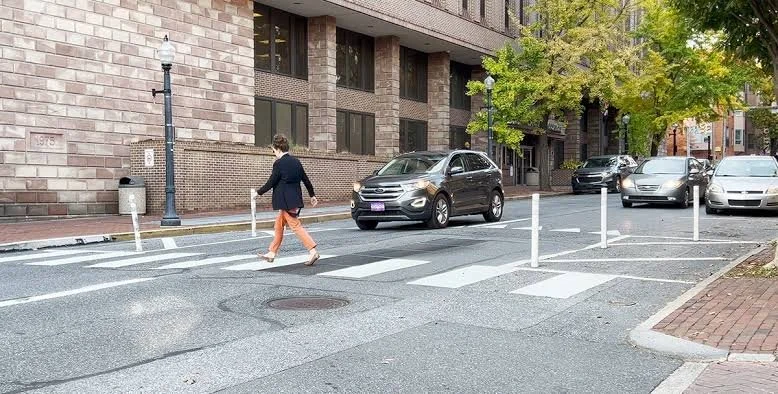
Daylighting is a safety improvement that restricts parking near intersections. This makes it easier for road users to see and respond to each other.
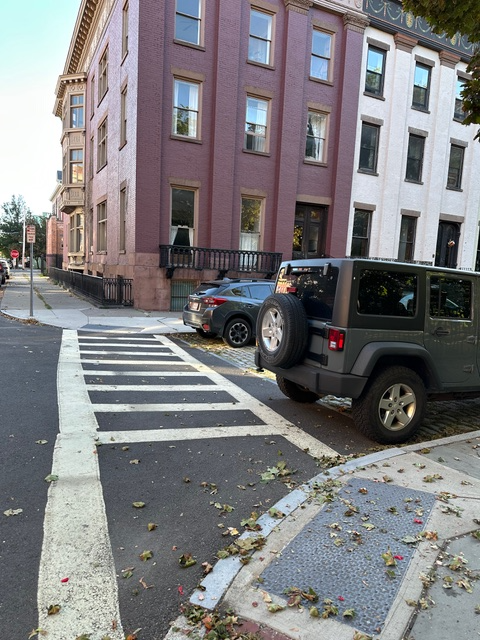
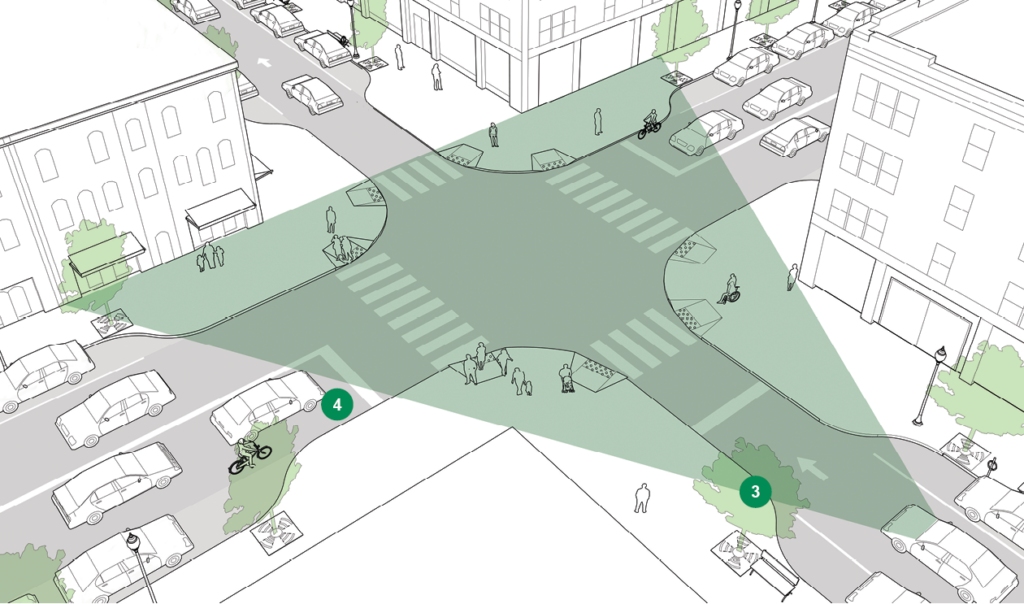
Intersection daylighting enhances safety and visibility at intersections and crosswalks by improving sightlines. Keeping crossings clear of visual obstructions makes it easier for drivers to review approaching pedestrians, reducing the likelihood of conflicts.
How Daylighting Works
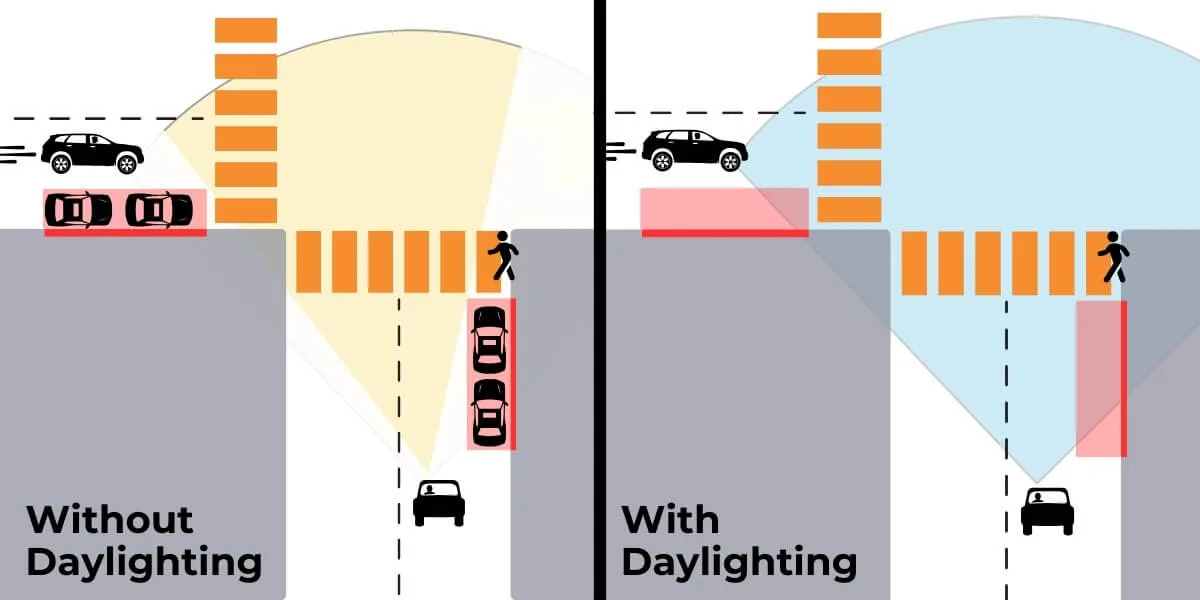
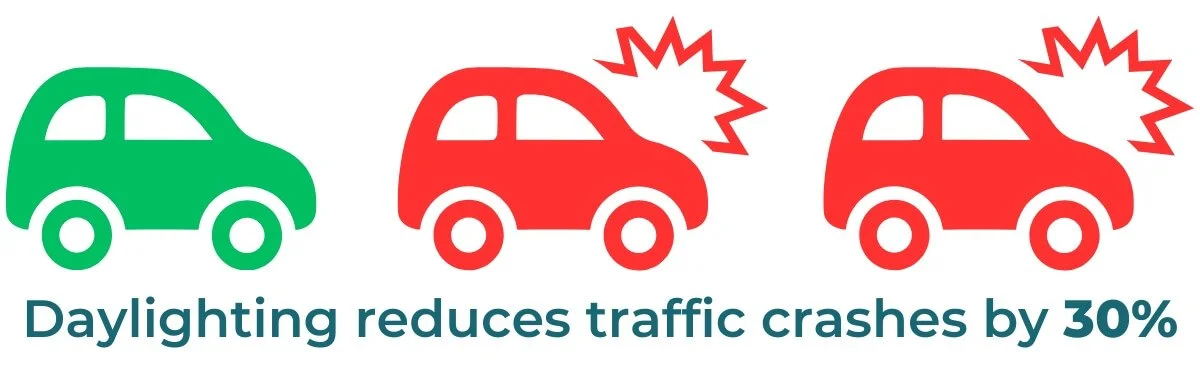
According to the Federal Highway Administration, restricting parking near intersections can reduce pedestrian crashes by 30%. Removing parked cars reduces blind spots. This gives drivers, pedestrians, and cyclists a better view of the intersection, which provides more time to respond to others approaching road users. It can also help to slow turning vehicles so they’re more likely to see and yield to pedestrians in the crosswalk.
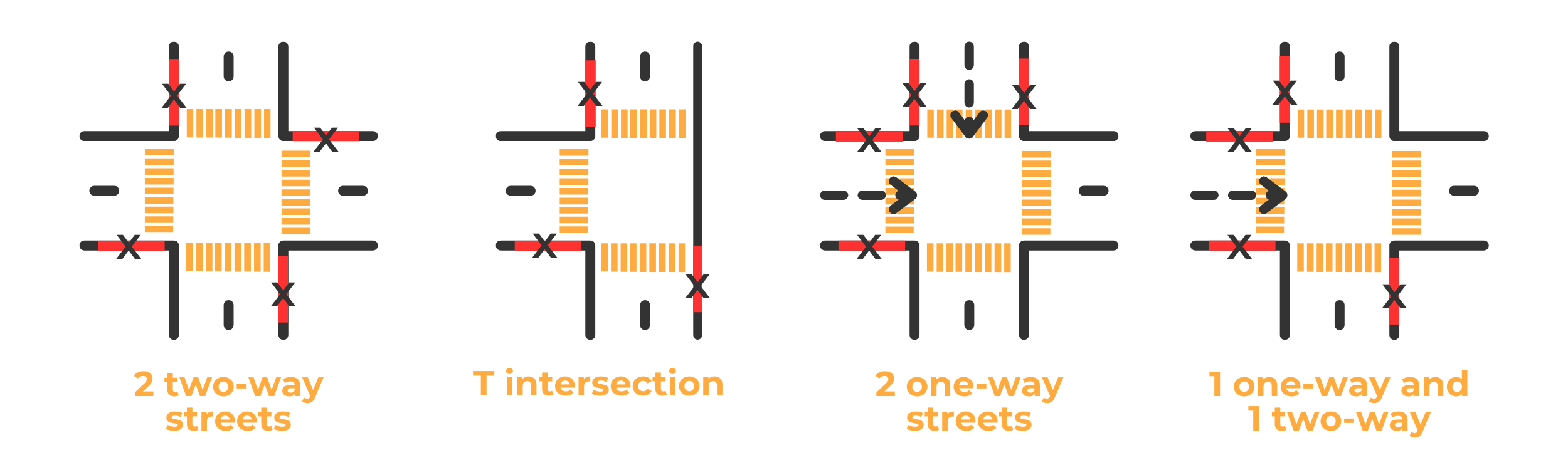
By removing the parking spots closest to an intersection to increase visibility, we can make intersections safe. New York State law requires daylighting (banning parking within 20 feet of intersections), but our cities often override this life-saving requirement to prioritize parking over safety.
This dangerous exemption from state law limits visibility for everyone on our streets, especially drivers, preventing them from seeing people in the crosswalk. We know daylighting works, with cities like Jersey City and Hoboken both crediting their reductions in traffic deaths and injuries to daylighting. Daylighting is also an opportunity to repurpose curb space for bike corrals, climate change mitigation, public seating, and more.
Daylighting makes intersections safe by clearing the curb space next to the crosswalk and upgrading it with amenities that benefit the community. Transportation Alternatives, a non-profit advocacy organization based in New York City that works to reduce car dependency and reclaim public streets for walking, biking, and public transit, has identified six ways to clear the curb space adjacent to an intersection and upgrade that space with infrastructure a neighborhood needs.
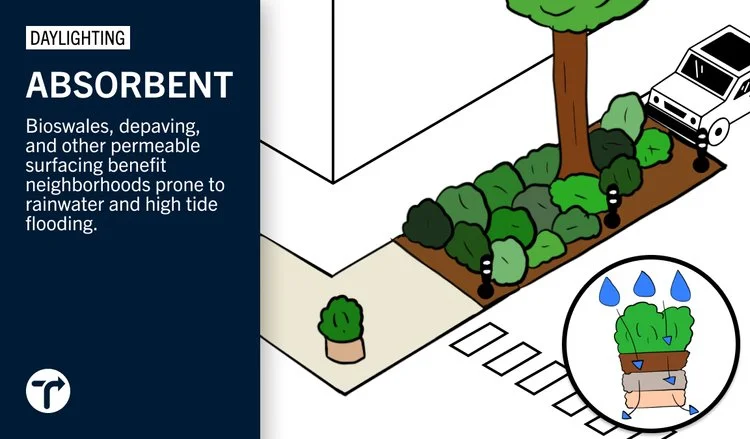
Clearing the curb space next to a crosswalk and upgrading the space with bioswales, green gutters, and permeable surfaces helps reduce flooding in neighborhoods burdened by excess asphalt and limited natural drainage.
Absorbent Daylighting
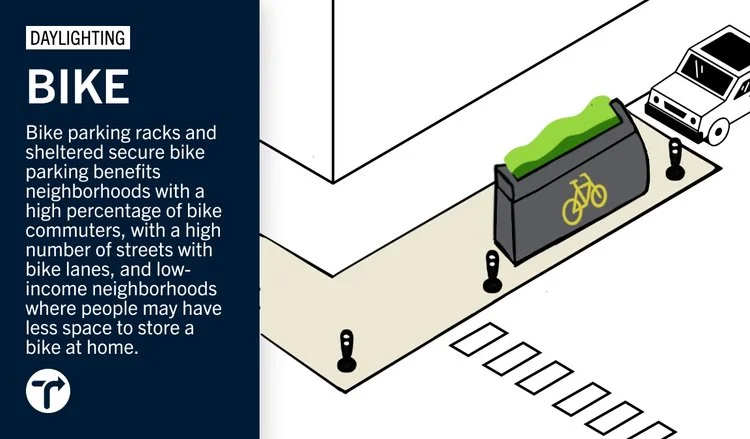
Clearing the curb space next to a crosswalk and upgrading the space with on-street bike racks and secure parking stations provides essential bike parking in neighborhoods with limited sidewalk space, high numbers of bike commuters, a network of bike lanes, and many residents living in poverty.
Bike Daylighting
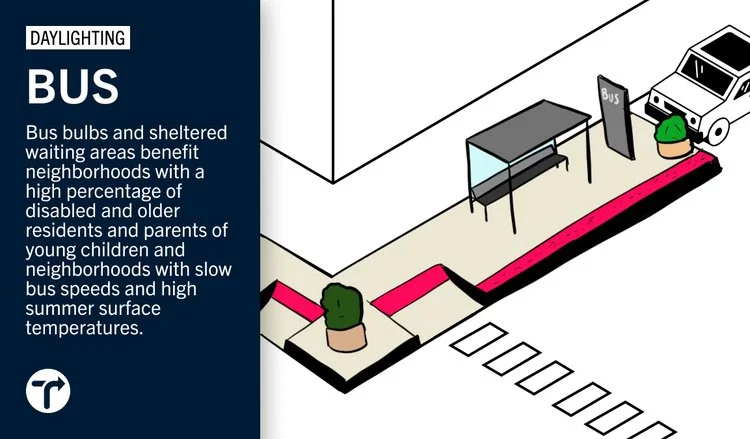
Clearing the curb space next to a crosswalk and upgrading the space with sheltered bus boarding and wait areas supports neighborhoods with many bus commuters, parents with young children, older adults, disabled residents, limited sidewalks, slow buses, and high heat.
Bus Daylighting
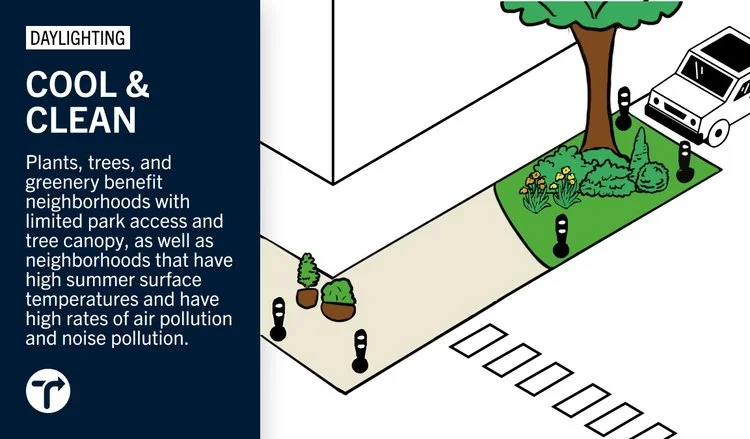
Clearing the curb space next to a crosswalk and upgrading the space with trees and greenery enhances neighborhoods with limited parks, low tree cover, high heat, and elevated levels of asthma, air, and noise pollution.
Cool & Clean Daylighting
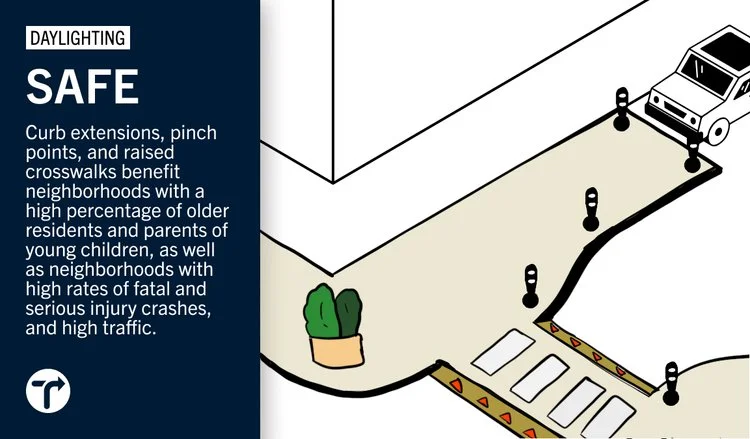
Safe Daylighting
Clearing the curb space next to a crosswalk and upgrading the space with curb extensions improves safety in neighborhoods with heavy traffic, high crash rates, parents with young children, older adults, and disabled residents.
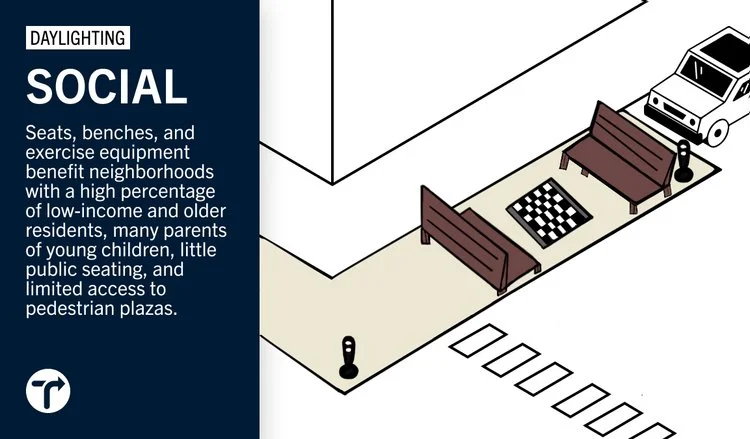
Clearing the curb space next to a crosswalk and upgrading the space with café seating, benches, or exercise equipment enhances neighborhoods with limited sidewalks, public seating, parks, and pedestrian plazas, benefiting parents, older adults, disabled residents, and low-income communities.
Social Daylighting
Benefits of Hardened Daylighting
Intersections with heavy pedestrian traffic, such as near schools, parks, shopping centers, and transit hubs, benefit greatly from hardened daylighting to improve visibility and reduce the risk of conflicts.
Enhance Sitelines
Physical treatments such as bollards, granite blocks, and bike corrals help prevent vehicles from parking too close to intersections, ensuring that sightlines remain unobstructed.
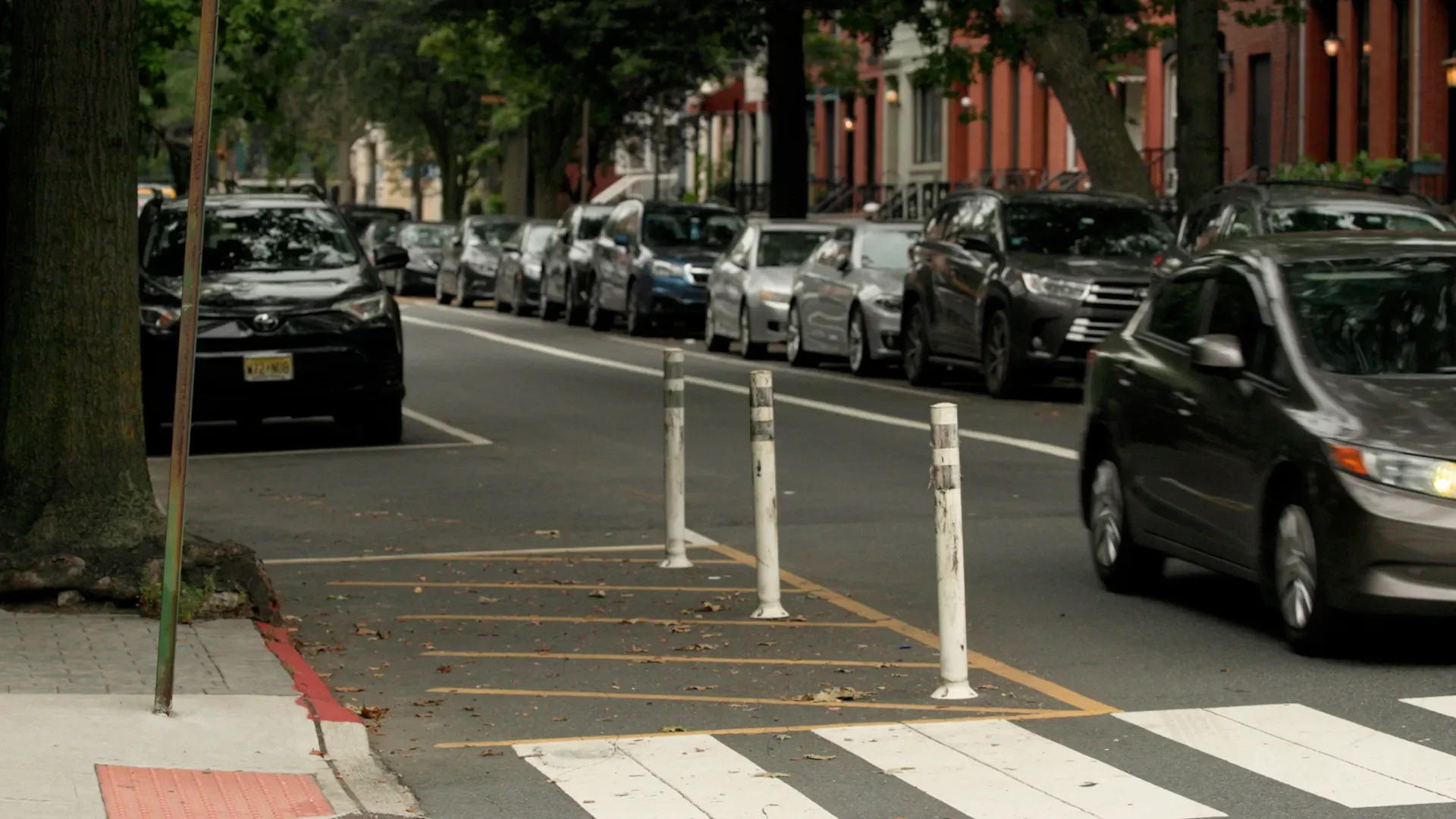
Improve Traffic Flow
Improved traffic flow is achieved by reducing accidents and preventing illegal parking.
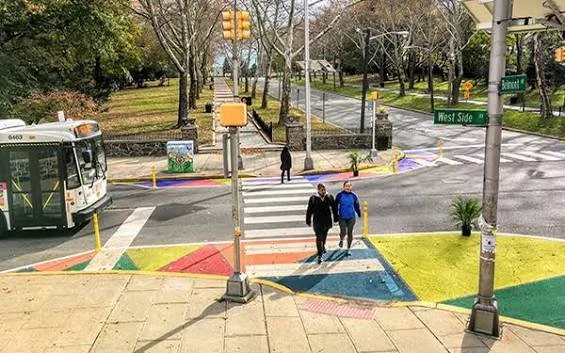
Encourage Public Health
More navigable intersections contribute to a more pedestrian-friendly environment, encouraging walking and cycling, which can improve public health and reduce environmental impact.